Social media plays an important role in how patients discover, research and evaluate private healthcare providers. Before booking, a patient may check a clinic’s social profile, watch a consultant explain a treatment or assess whether the practice appears active and credible.
For private clinics, social media has become an important part of how patients discover and assess a healthcare provider. Managing it well means sharing useful, relevant content that builds confidence in the clinic and helps potential patients move closer to making an enquiry or booking an appointment.
Clinic marketing support: For an agreed clinic content calendar, responsible campaigns, approvals and reporting, visit our Social Media for Clinics service.
What Is Healthcare Social Media Management?
Healthcare social media management is the planning, creation, publishing and measurement of social content for clinics, consultants and healthcare organisations. It can include organic posts, short-form video, paid social advertising, community management and performance reporting.
Unlike general social media marketing, healthcare content must balance commercial objectives with clinical accuracy, patient confidentiality and professional standards. The aim is to make a provider easier to understand, trust and contact.
Why Social Media Matters for Private Clinics
Patients rarely make healthcare decisions from one advert. They often research a clinic across several touchpoints before deciding whether to enquire.
A strong social presence can answer questions that arise naturally during that process. Who are the clinicians? What do they specialise in? What happens during an appointment? What conditions does the clinic treat? Does the organisation appear professional and approachable?
Social media gives clinics a chance to demonstrate those qualities before a patient speaks to reception. It can also keep the clinic visible to people who are not ready to book immediately.
Which Social Media Platforms Should Healthcare Providers Use?
The most suitable social platforms will depend on the type of clinic, the services being promoted and the patients you want to reach.
Instagram is a strong choice for visual content, short educational posts and videos featuring clinicians. Facebook can be useful for reaching local audiences and running targeted advertising campaigns, while LinkedIn is better suited to professional networking, consultant profiles, recruitment and B2B activity. YouTube works well for longer-form educational videos, and TikTok can be effective for clinics that are comfortable producing short, informative videos in a more informal style.
Private clinics do not need to be everywhere. Two well-managed channels that suit the target audience are usually more valuable than five neglected profiles.
What Should a Private Clinic Post?
Successful healthcare content should be useful before it is promotional.
Social content works best when it helps patients understand something they genuinely want to know. Clinics can use posts to explain common symptoms, conditions and treatment options, while short videos from clinicians can answer frequently asked questions in a more personal way. Introducing the team or showing the clinic environment can also make the practice feel more familiar. Where appropriate consent has been obtained, patient experiences and testimonials can add another layer of reassurance.
Useful content ideas include condition posts, clinician introductions, frequently asked questions, patient reviews, appointment explainers and videos linked to treatment pages.
The strongest content usually answers a real patient question instead of simply announcing that a service exists.
Social Media Should Support the Patient Journey
Healthcare social media management becomes more valuable when it connects with the rest of a clinic’s marketing.
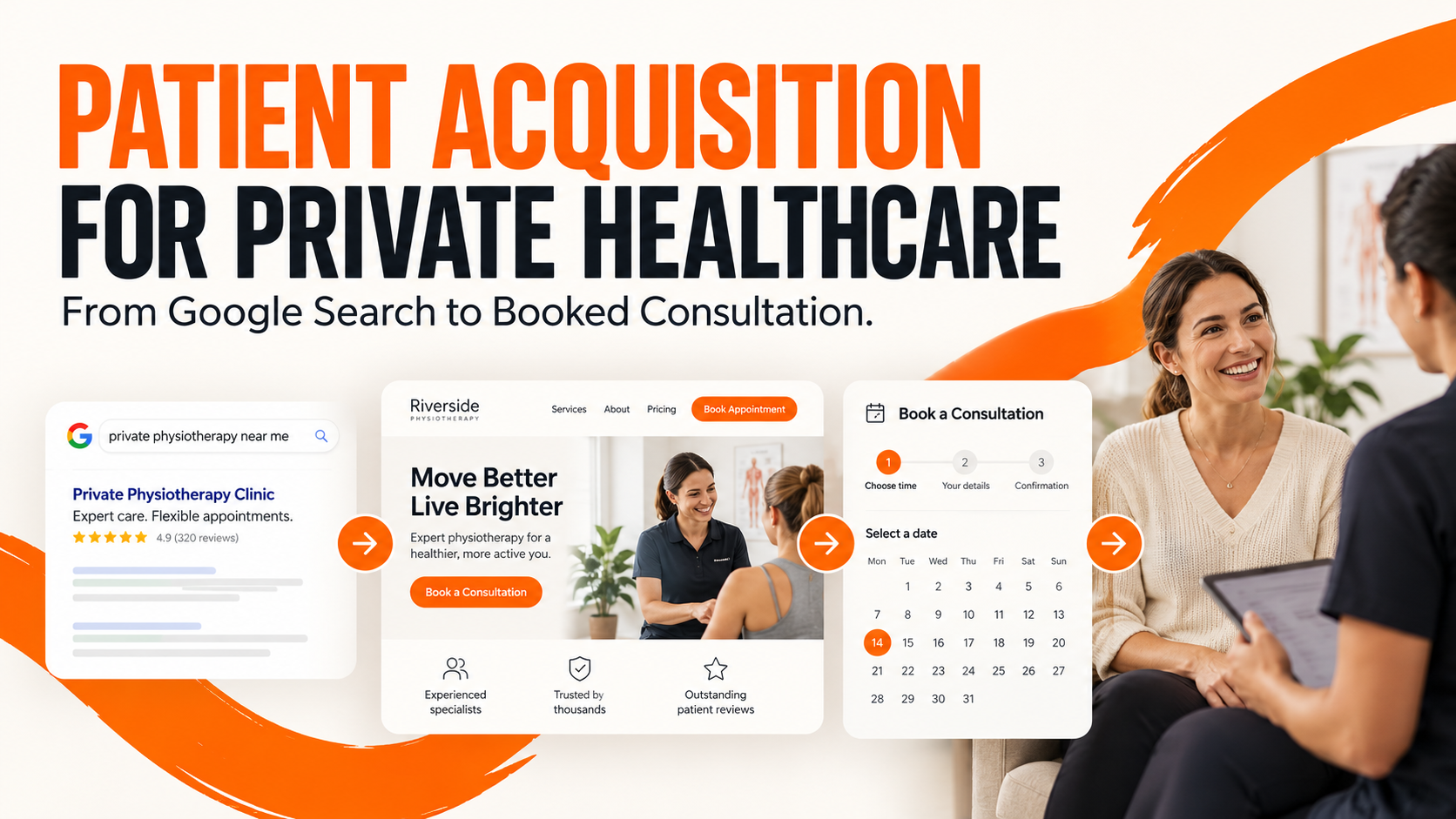
A patient might first see an educational video on Instagram, later search the clinician’s name on Google, visit a treatment page, read reviews and then make an enquiry. Social media can contribute to that journey even if it wasn’t the final recorded source before the booking.
That is why social strategy should work alongside healthcare SEO, website content, Google Ads, reputation management and conversion tracking.
Content can also support priority services. If a clinic wants to grow a particular treatment, social posts can answer questions about the condition, diagnosis, treatment options, recovery and suitability while directing interested users towards more detailed website information.
Healthcare Social Media Needs the Right Level of Care
Promoting healthcare services online comes with greater responsibility than marketing most everyday products or services.
Social media posts and paid campaigns need to be accurate, balanced and supported by appropriate evidence. The UK CAP Code applies to healthcare advertising across social platforms, so clinics should avoid overstating results, making claims they cannot substantiate, or using language that could place unnecessary pressure on patients.
Clinicians should also be mindful of their professional responsibilities when posting online. Any information shared with the public needs to be accurate and easy to understand, while patient confidentiality must remain protected at all times. Photos, testimonials and case studies should only be published when the appropriate consent has been obtained and the patient’s privacy is fully respected.
Content review is therefore an important part of healthcare social media management. A post can be engaging without becoming sensational, and persuasive without making unsupported claims.
Organic Social Media and Paid Social Advertising
Organic and paid social media serve different purposes.
Organic content helps establish the clinic’s expertise, voice and credibility over time. Paid social can increase the reach of selected services or campaigns and place relevant messages in front of defined audiences.
Don’t judge paid campaigns by clicks alone. Clinics should consider whether they generate suitable enquiries, booked appointments and commercially valuable patients.
Landing pages matter too. Social traffic should lead to clear information about the service, clinician, next steps, and how to book.
How Should Social Media Performance Be Measured?
Follower numbers can be encouraging, but they are not the main measure of success.
Useful metrics include reach, meaningful engagement, video views, website visits, enquiries, calls, appointment requests and conversions. Clinics should also identify which topics repeatedly attract attention and which content encourages action.
Reporting helps you learn which messages, services, formats, and platforms drive growth.
Why Use a Specialist Healthcare Social Media Management Agency?
Healthcare social media sits at the intersection of marketing, medicine, regulation and patient behaviour. Sector experience therefore matters.
A specialist healthcare marketing agency can build content around genuine patient interests while understanding the need for accurate language, professional presentation and appropriate claims. It can also connect social media with SEO, paid media, website strategy and enquiry tracking instead of treating it as an isolated channel.
At Spiders & Milk, we help private clinics build clear, ethical marketing strategies focused on visibility, better patient enquiries, and long-term growth. Social media forms part of that wider approach, helping healthcare professionals communicate expertise while giving potential patients useful reasons to know, trust and remember their clinic.
Good healthcare social media management is about much more than posting regularly. Done properly, it helps a clinic stay visible, build trust over time and give potential patients the information and reassurance they need before deciding to get in touch or book an appointment.