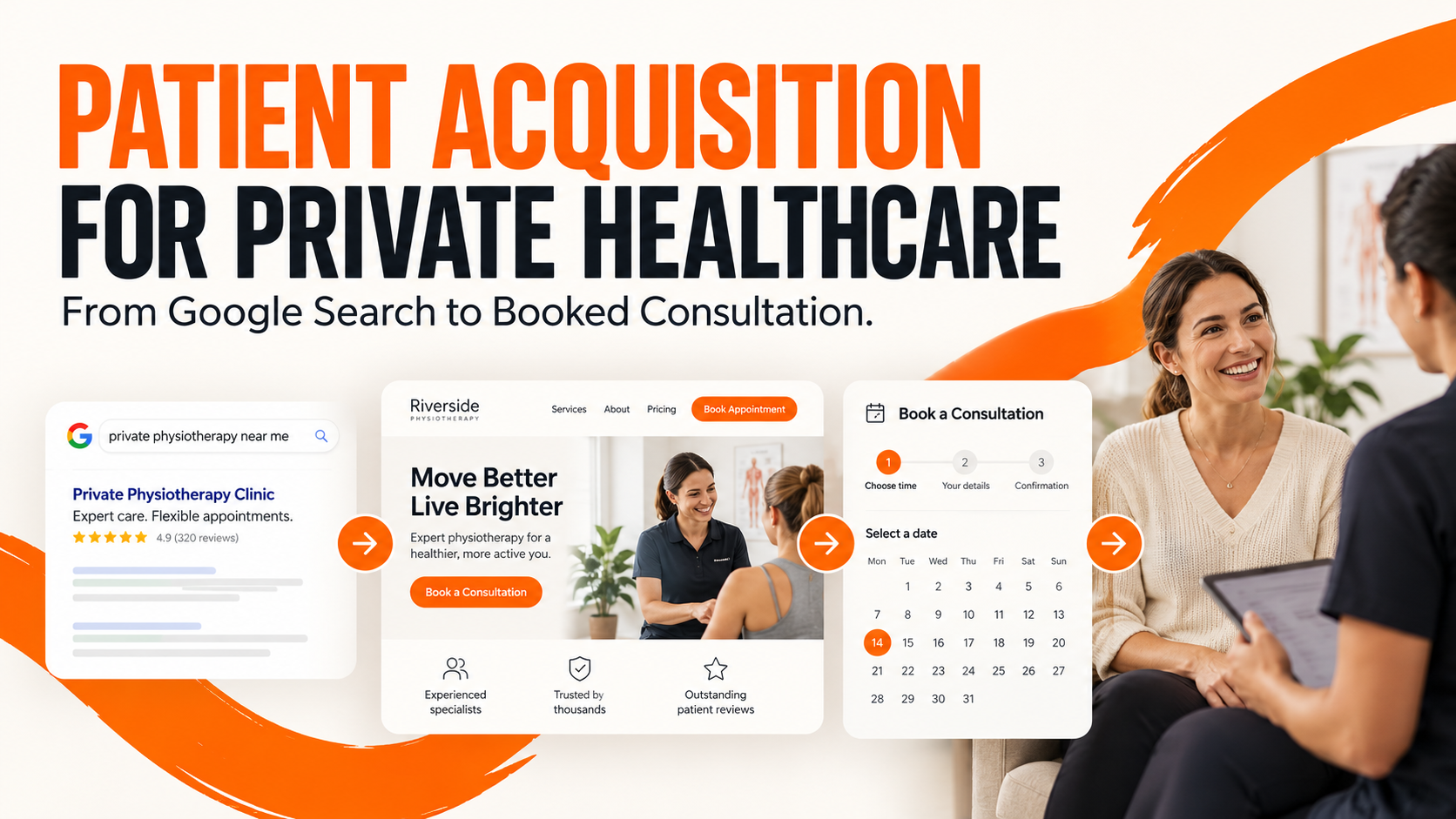
A consultant-led practice should not build a search campaign merely by bidding on every diagnosis or clinician-adjacent term. A person researching treatment, someone looking for a named doctor and someone ready to book a private specialist consultation have different intentions. The campaign and website should make that distinction clear.
Who this is for: UK private healthcare owners, practice managers and marketing teams. The guidance is about digital communications and measurement, not individual medical decisions or legal advice.
Clinic marketing support: The wider delivery of specialist consultation search campaigns is explained on our Google Ads for Private Clinics service page.
Separate clinician-name and consultation searches
Review the terms that relate to a named practitioner, specialty consultation, location and general medical research. A search for a condition may be informational or otherwise unsuitable for advertising. Only select service terms the clinic can accurately support with its actual appointment offering, and exclude irrelevant query patterns deliberately rather than mechanically.
Make eligibility review part of campaign planning
Healthcare advertising restrictions depend on the service, products, location and destination. Certain prescription-drug and sensitive health-content rules apply; some targeting techniques are restricted. Check the exact proposed campaign with current platform policies and relevant UK rules before launch. Do not assume that appearing for a particular medical term gives permission to run personalised health audiences.
Use consultation-first landing pages
Each landing page should clearly name the consultation type, who provides it, verified credentials, whether it is in-person or remote, realistic clinic locations, fees if confirmed and a contact route. Do not promise diagnostic or treatment outcomes. A service-related advert should not lead to a generic clinician biography if it leaves the appointment route unclear.
Match geography to reality
A consultant may serve a broader region than a local physiotherapy clinic, but that still does not justify targeting every UK town. Review actual appointment locations, patient travel requirements and availability of remote sessions if offered. Keep separate reporting where clinical services and fee structures differ materially.
Distinguish conversions from clinical outcomes
Calls, booking requests and actual appointments should be measured separately where systems allow. Avoid including diagnoses, symptoms or individual patient details in URL parameters, marketing tags or conversion uploads. A completed consultation is not evidence of a particular clinical outcome.
Review quality with the practice manager
Use weekly search-term checks and cost per qualified enquiry, supported by actual diary capacity and reception feedback. Annotate changes in clinician availability and tracking. A campaign for a consultant on leave can waste spend even when search volume and click-through rate appear strong.
Frequently asked question
Should we advertise a consultant’s name or a clinical specialty? It depends on genuine search intent, the practitioner and clinic’s approvals, the type of appointment, platform policy and the available budget; testing should avoid misleading implications of affiliation.
Where to go next
Read specialist consultation clinic marketing, consultant profiles, referrals and SEO and the specialist orthopaedic website case study. Platform references: health in personalised advertising and prescription drug service restrictions.
Request a private clinic marketing review for help auditing your existing website and enquiry journey.