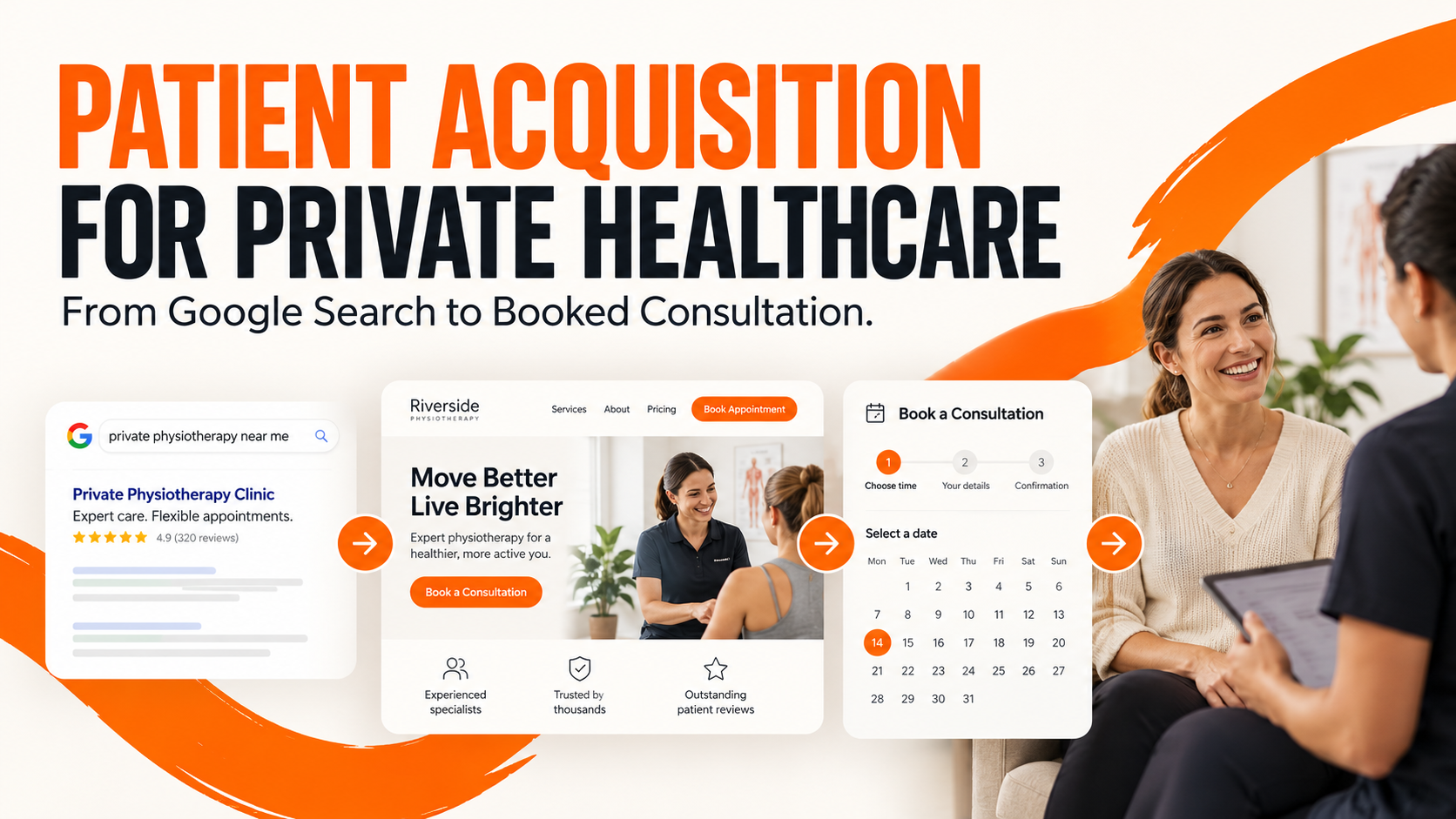
A website for a cosmetic or minor surgery clinic needs to answer a prospective patient’s practical questions while respecting advertising and professional standards. A clear structure separates the clinic’s identity, individual consultation services, qualified practitioners and real locations. It also avoids promotional treatment language that may be prohibited for particular products or procedures.
Audience: owners, managers and marketing teams at UK private healthcare practices. This article concerns website and advertising processes; clinical decisions, claims and regulated services need appropriate specialist sign-off.
Clinic marketing support: For consultation-first page structure and practical booking improvements, explore our Clinic Website Design and CRO service.
Build the site around an accurate service list
Identify the consultations and services genuinely offered, their provider credentials, locations and appropriate booking routes. Distinguish minor surgery from non-surgical cosmetics; grouping them under one vaguely named ‘aesthetics’ heading can obscure important scope and regulatory differences. Have clinical staff review any patient-facing service claims.
Make the consultation the primary user journey
The top of the relevant page should state what kind of appointment can be requested, where it takes place and how suitability is assessed by the clinician. A marketing page should not imply that every enquiry results in a procedure or guarantee an aesthetic or clinical outcome. Use accurate information about fees and next steps where the practice has supplied it.
Keep prescription-only medicine promotion out of public advertising
UK CAP guidance restricts the public advertising of prescription-only medicines, including botulinum toxin products. A permitted factual website reference is not equivalent to permission for a promotional advert, social post or search-result headline. Review the exact journey, text, images, pricing and calls to action against current CAP guidance before publication.
Use practitioner profiles and locations carefully
Display verified qualifications, relevant registrations, consultation scope and the real facilities available. A professional biography can help a visitor understand who provides an appointment; it should not exaggerate professional standing or substitute for appropriate informed clinical discussions. A location page needs truthful directions and service availability.
Check photos, testimonials and claims
Before-and-after images and testimonials can create claims about typical results. Obtain appropriate permissions and retain evidence for any efficacy impression; avoid editing images in ways that overstate effects. A testimonial does not make an otherwise prohibited prescription-only medicine promotion acceptable.
Link into supporting content without duplicate pages
A consultation page should link to relevant practitioner and location information, a clinic’s contact route and any approved practical FAQs. Do not mass-create ‘procedure + city’ pages with almost identical content. Keep the agency’s business-facing marketing advice distinct from the clinic’s patient-facing clinical information.
Common question
Can a clinic promote a consultation even when it cannot promote a named prescription treatment? A consultation-first approach may be appropriate, but the exact wording, presentation and context must be assessed under current UK rules. It is not a workaround for prohibited promotion.
Relevant guidance and a practical next step
Read our cosmetic and minor surgery clinic marketing overview and claims and advertising checklist. Regulatory references: CAP cosmetic interventions guidance and CAP prescription-only injectable advertising guidance.
Request a private clinic marketing review to check your existing content, enquiries and booking experience.