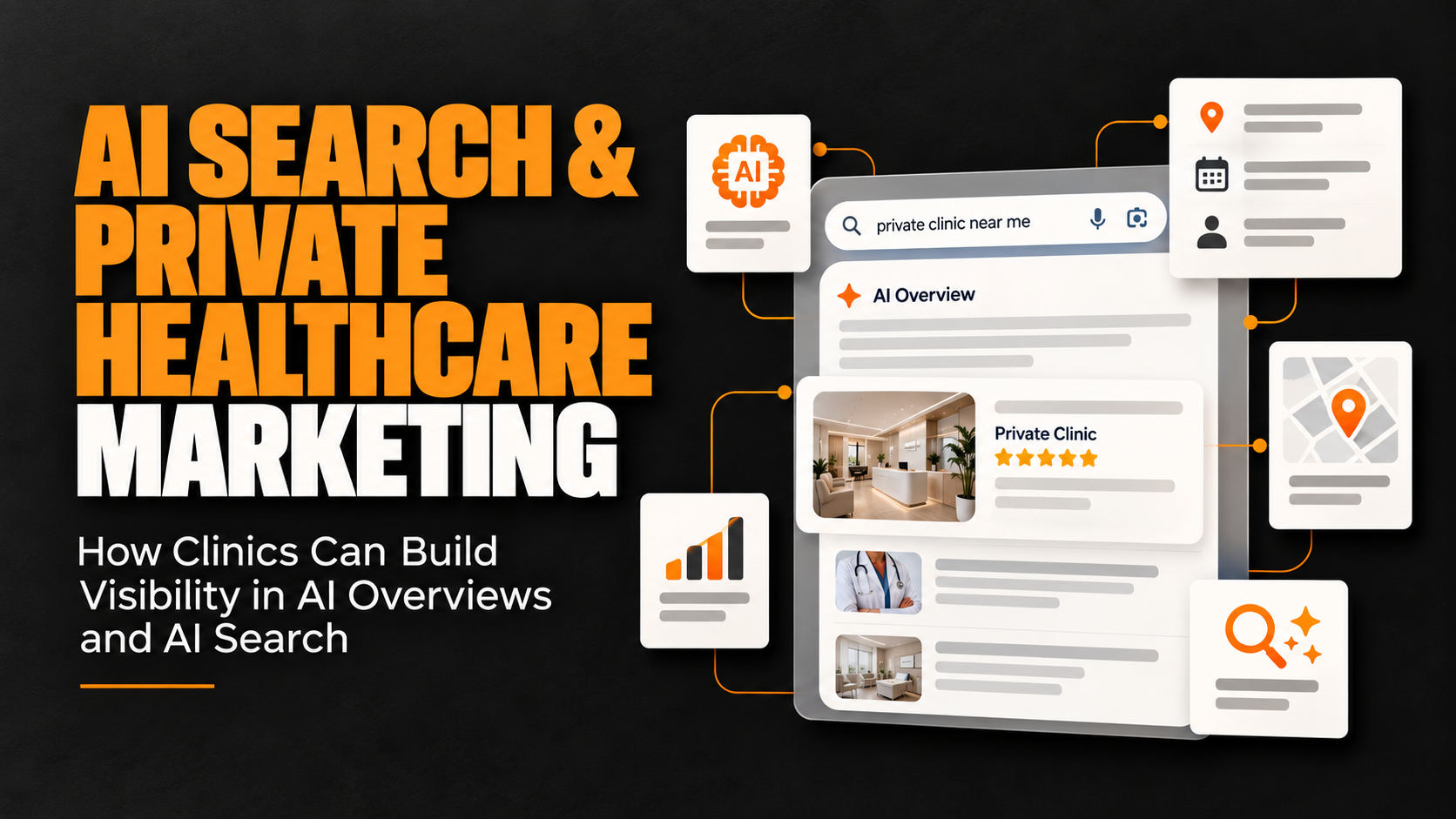
For private clinics, consultants and healthcare providers, this creates another place where visibility matters.
However, AI search and private healthcare marketing should not be treated as an entirely new discipline. Google states that its existing SEO principles still apply to generative AI search and that websites don’t need special AI-specific optimisation or markup to become eligible for AI Overviews or AI Mode.
The opportunity, then, is not to find an AI search shortcut. It is to build a website that gives search engines clear, useful and trustworthy information about your clinic, services and expertise.
How Is AI Changing Search for Private Healthcare?
Traditional searches are often relatively short, such as “private dermatologist London” or “private physiotherapy clinic near me”.
AI-powered search makes it easier for people to ask much more detailed questions.
Someone might search for a provider while simultaneously considering location, appointment availability, cost, practitioner experience and what happens during the consultation.
Google explains that AI Overviews and AI Mode can use a process known as query fan-out, where multiple related searches are performed across different subtopics before an answer is assembled. This means visibility may depend on whether different parts of a clinic’s website provide useful information for the wider subject, rather than whether one page simply targets an exact keyword.
For healthcare providers, that strengthens the case for developing genuine topical authority around the services they offer.
Do Private Clinics Need AEO or GEO?
Terms such as Answer Engine Optimisation (AEO) and Generative Engine Optimisation (GEO) are increasingly used to describe strategies designed to improve visibility within AI-generated answers.
They can help describe the changing search environment, but Google currently takes a simpler position: optimisation for its generative search features remains fundamentally part of SEO.
A private clinic should therefore be cautious about abandoning established healthcare SEO in favour of supposed AI-specific tricks.
Technical SEO, high-quality content, internal linking, website usability and clear business information remain central.
Build Strong Service Pages Before Producing More Content
For many private healthcare websites, the most commercially important pages are still the individual service and treatment pages.
These pages should make it easy to understand what the clinic provides, who provides it, where the service is available, how appointments work and what the next step is.
Supporting content can then answer more specific questions surrounding that service.
For example, instead of publishing unrelated blog posts simply because individual keywords appear attractive, a clinic could create a structured group of pages around one important clinical service. Supporting articles can answer relevant questions and link naturally back to the main service page.
This creates a clearer relationship between healthcare content marketing, SEO and the patient journey.
It also gives search systems more useful material to retrieve when somebody asks a detailed or multi-part question.
Create Content That Adds Something Original
The growth of generative AI makes generic content easier than ever to produce.
That makes genuine expertise more valuable.
Google’s current guidance specifically encourages websites to develop useful, distinctive and “non-commodity” content rather than simply reproducing information that already exists elsewhere.
For a private healthcare provider, this could mean adding explanations based on how the clinic actually operates.
A consultant could explain what patients should expect when arranging an initial consultation. A clinic could explain how appointments are structured, what information patients may need beforehand or how different professionals within the practice work together.
The objective is not to add words for SEO purposes. It is to publish information that somebody considering the clinic would genuinely find useful.
That approach creates a natural opportunity to connect SEO services, content marketing and website conversion optimisation.
Make Expertise and Trust Easy to Verify
Trust is particularly important for healthcare websites.
Google’s guidance on helpful content explains that its systems look for signals associated with experience, expertise, authoritativeness and trust, commonly referred to as E-E-A-T. Google also states that stronger trust considerations apply to subjects that can affect someone’s health or safety.
Clinics should therefore make the people behind their content visible.
Where appropriate, important medical or treatment information should have clearly identified authors or reviewers. Practitioner profiles should explain relevant qualifications and professional experience, and information such as professional registration should be accurate and verifiable.
Publication and review dates can also help demonstrate that important information is being maintained.
This should extend beyond articles. Clear contact information, clinic locations, About pages,s and practitioner biographies all contribute to a website that is easier for both patients and search engines to understand.
Make the Website Technically Accessible to Search
Excellent content contributes little to search visibility if Google can’t access it properly.
To appear as a supporting source within Google’s generative search features, a page needs to be indexed and eligible to appear in normal Google Search with a snippet. Google does not currently require a separate AI sitemap, special AI schema or other unique markup for AI Overviews or AI Mode.
That means clinics should continue concentrating on the fundamentals.
Pages should be crawlable, important information should be available as text, internal links should make important services easy to discover, duplicate content should be controlled, and the website should provide a good experience across devices.
Structured data can still be valuable when it accurately describes the visible page. Google also recommends organisation and local business structured data to help it understand information such as an organisation’s name, location, contact details,s and other business information.
Structured data should support accurate information, not be viewed as a shortcut to AI visibility.
Do Not Ignore Local SEO
AI search does not remove the importance of location for private healthcare.
When somebody is looking for a clinic in London, Manchester, Birmingham or another UK location, the search engine still needs accurate information about where the provider operates.
Individual clinic locations should therefore have clear pages containing consistent contact and location information.
Google Business Profile information should also be maintained carefully. Google specifically recommends keeping Business Profile information current as part of its guidance for visibility within AI-powered search experiences.
This is where local SEO, Google Business Profile optimisation and the main clinic website should support one another rather than being managed separately.
How Can Clinics Measure AI Search Visibility?
Measurement is becoming more important as search results change.
As of August 31, 2026, Google says its dedicated generative AI performance reporting in Search Console has been rolled out to websites worldwide. The reporting provides visibility information relating to generative AI experiences such as AI Overviews and AI Mode.
Clinics should not assess this information in isolation.
Search Console can show how search visibility is developing, while analytics, enquiry tracking, call tracking and CRM data can help determine whether that visibility ultimately contributes to new patient enquiries.
A practical AI search strategy should therefore monitor the complete journey:
- Confirm that important service and location pages can be crawled and indexed.
- Strengthen service pages before producing large quantities of supporting content.
- Create useful articles based on genuine patient questions and clinic experience.
- Use clear authorship, practitioner profiles and reliable source references where appropriate.
- Improve internal links between articles, services, practitioners and locations.
- Keep structured business information and Google Business Profile details accurate.
- Measure Search Console visibility alongside calls, forms, bookings and other meaningful enquiries.
AI Search Should Be Part of a Wider Healthcare Marketing Strategy
AI Overviews and AI Mode change how information can be presented, but the fundamentals of effective private healthcare marketing remain remarkably consistent.
Clinics need technically sound websites, useful content, visible expertise, accurate business information and a clear path from search to enquiry.
The providers most prepared for AI search will not necessarily be those publishing the most content or chasing every new optimisation trend. They will be those building a website that consistently gives patients — and the search systems serving them — clear reasons to understand and trust the organisation.
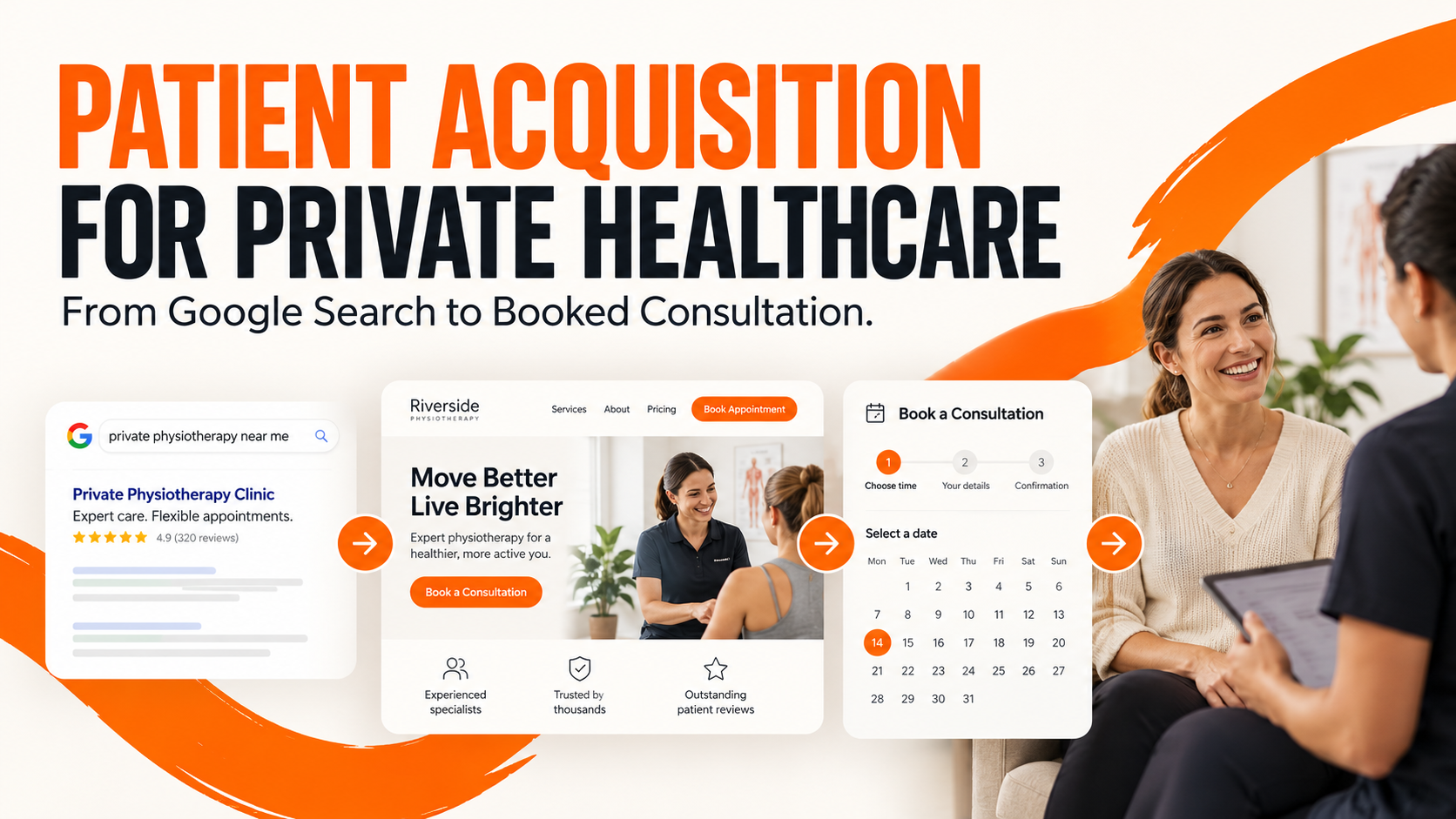
For private healthcare businesses, AI visibility should therefore sit alongside healthcare SEO, local SEO, content marketing, website optimisation and marketing analytics as part of one connected patient acquisition strategy.