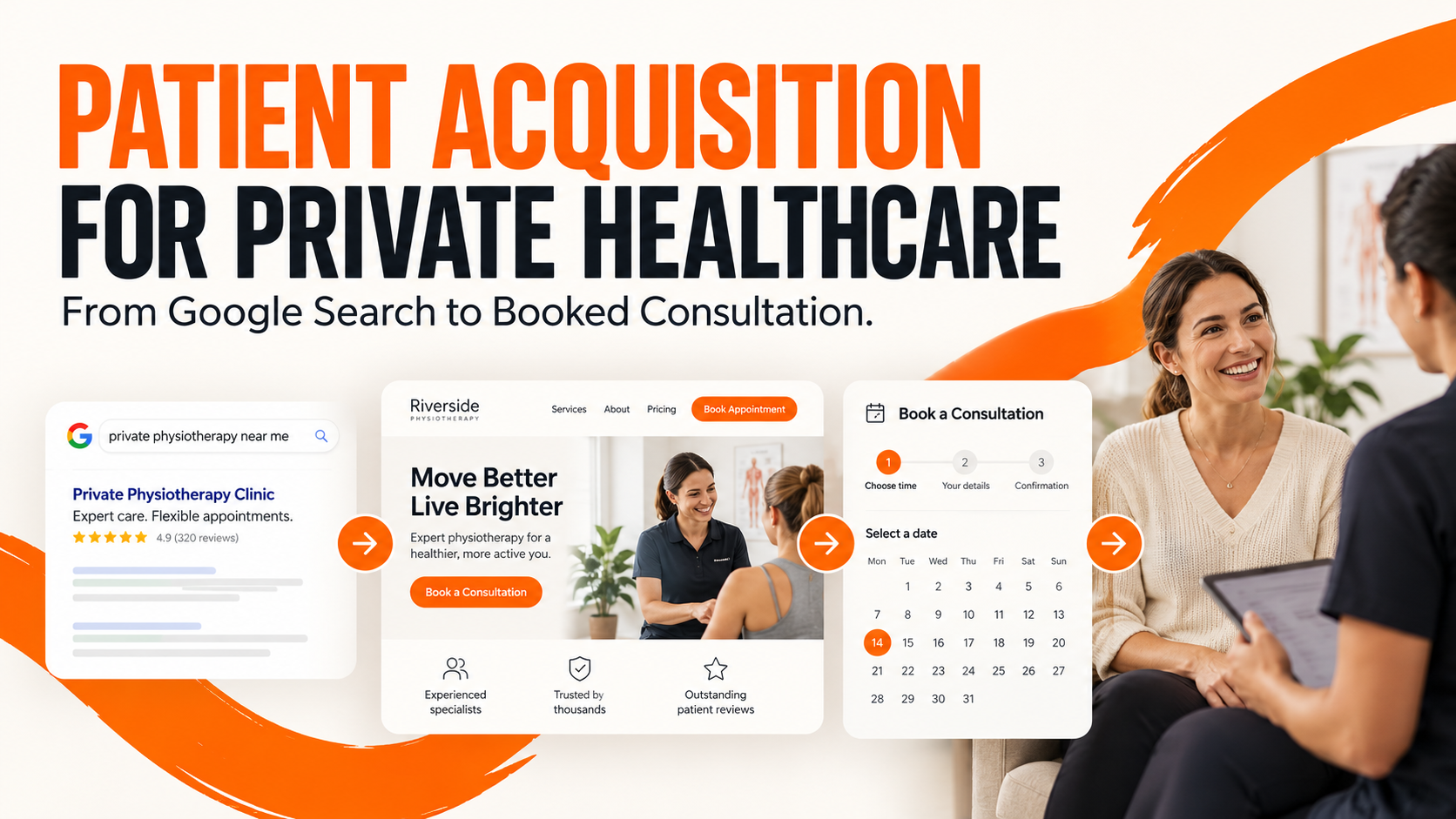
A private dental practice may have an attractive website yet make it surprisingly difficult to arrange the right appointment. Before creating more treatment content or increasing ad budgets, check the essentials: local visibility, approved service information, transparent booking steps and the way calls and forms are handled.
For clinic owners and practice managers: this is a marketing and website operations guide, not advice about clinical suitability or treatment. Start with our dental practice marketing service overview.
Clinic marketing support: Our Clinic Website Design and CRO service includes mobile contact journeys, form reliability and clearer consultation pathways.
Show which services the practice genuinely offers
A general practice and a specialist referral practice do not have the same patient needs. Map the services actually provided and the appointment or consultation required. For each substantive treatment page, explain the next step without suggesting that a procedure will automatically be suitable for the person reading.
Give every practice location accurate contact details
Patients should find the address, contact number, directions and realistic booking availability without searching through the footer. If the practice has several branches, distinguish their services and clinicians rather than copying the same information and swapping town names.
Multi-location dental SEO without copied branch pages
Where a dental group has several genuine practices, each branch should have its own accurate location information, available appointment types, team details, opening or reception hours and directions. Link from a treatment overview only to branches that actually provide the consultation or service. Avoid creating different URLs for dozens of neighbouring towns with the same copied text: the priority is helping the person understand where an appointment is available. Review which branch a tracking call or form actually reaches, and make the location selected during booking clear.
Make first-contact options obvious on mobile
Test the phone link, contact form and booking option on a real mobile connection. Is the selected service clear? Does the form submit? Is an enquiry acknowledgement delivered? Can someone understand what happens next? These are straightforward checks that may improve results without generating any additional traffic.
Be careful with dental advertising claims
Advertising standards and platform policies can affect treatment claims, imagery and audience targeting. Avoid promises about pain-free procedures, outcomes or suitability unless an appropriately substantiated and compliant claim is possible. Have the practice’s clinical team review specialist information.
Link treatments, teams and locations naturally
A patient reading about a treatment should be able to identify the clinician or practice offering it and how to request a consultation. Practitioner profiles need accurate qualifications and registrations. Supporting articles should answer real questions and link to the relevant treatment or appointment page.
Review reporting at the right level
Google clicks, telephone enquiries and confirmed appointments are not the same thing. Where the practice has appropriate consent and systems, compare quality enquiries by service and channel. Keep sensitive personal and clinical information out of unnecessary analytics events.
Questions practice owners ask
Should every dental treatment have its own SEO page?
Only where it answers a distinct need with accurate, substantive information and a real route to consultation.
Can paid ads replace local SEO?
They can reach some eligible searches more quickly but have ongoing costs and policy limits. Local SEO and useful service pages remain important independently.
Further reading and next steps
Our dental practice marketing overview provides the broader service approach, from local SEO and paid search to website and enquiry improvements.
Read our healthcare case studies, return to our dedicated sector overview, or request a clinic marketing review.
Written for UK private healthcare business owners. Advertising requirements vary by service and platform; review current policies and have clinical claims signed off before publishing them.