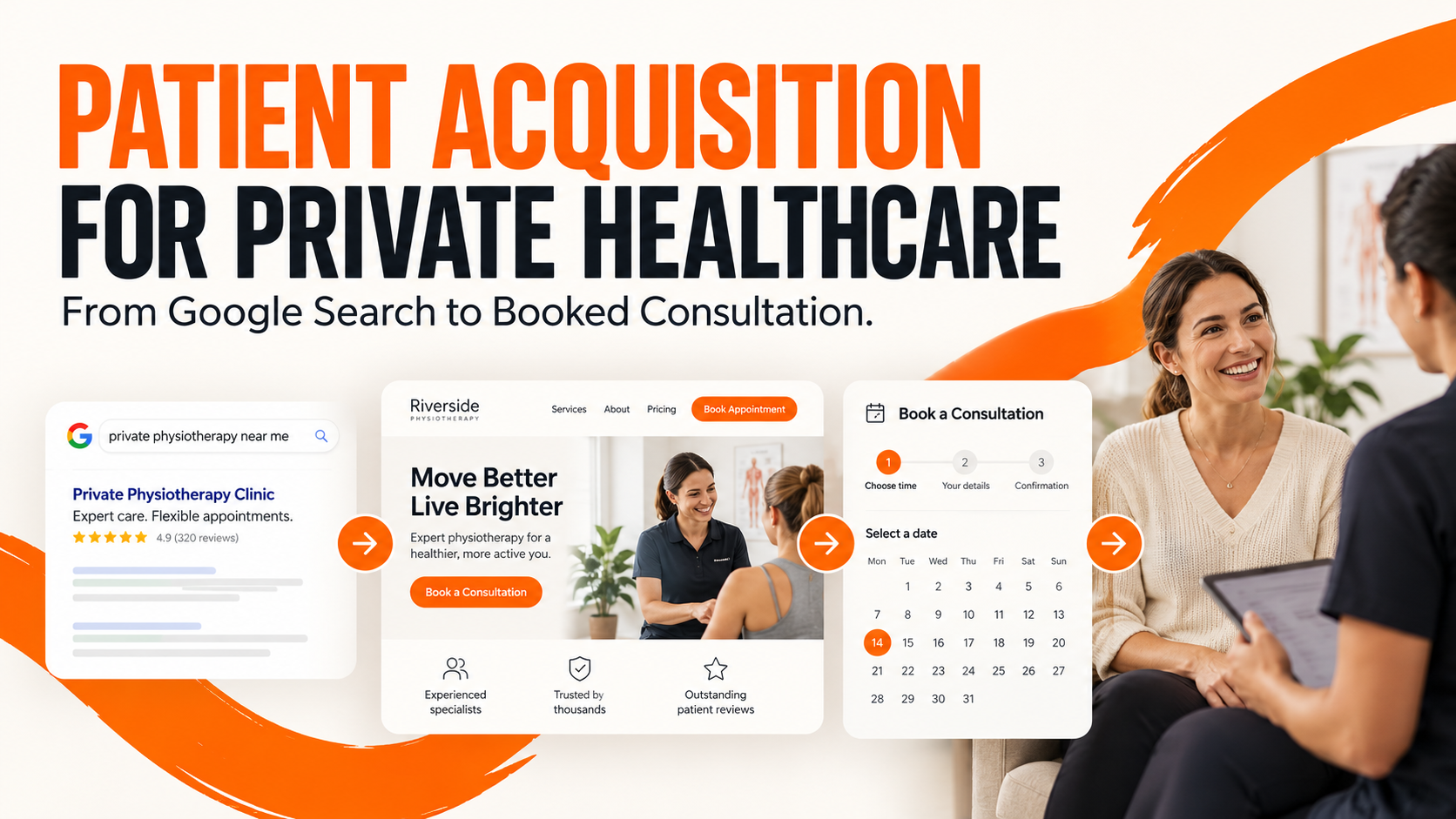
A diagnostic centre can rank for a relevant scan or imaging service and still lose an enquiry because the website does not explain whether the patient can self-book, needs a referral or must speak to the centre first. The solution is not simply another keyword page: the service page and the referral process must give consistent practical information.
Who this is for: UK private healthcare owners, practice managers and marketing teams. The guidance is about digital communications and measurement, not individual medical decisions or legal advice.
Clinic marketing support: Referral journeys, booking usability and safe online enquiry forms are covered by our Clinic Website Design and CRO service.
Inventory the booking and referral rules for each service
Build a matrix of the services genuinely available, which sites offer them, whether a referral is needed, what the team can confirm administratively and how the patient contacts the centre. Have clinical staff approve requirements. Avoid language that implies a diagnostic procedure is suitable for everyone.
Keep service content and clinic location content distinct
A useful diagnostic service page explains what appointment the provider offers and the approved booking pathway. A centre location page covers directions, opening or appointment hours, accessibility, parking where relevant and how to reach that specific location. Link between them where the service is genuinely provided there; avoid cloning the same content across multiple towns.
Make the first step unambiguous
If a referral is required, label the next action ‘Ask about a referral-based appointment’ or another phrase that accurately fits the centre. If self-referral is available for some services, do not imply it applies universally. Confirm whether contact buttons route patients to reception, a referral team or an online booking system.
Treat medical forms differently from marketing lead forms
Some referral forms may collect health data or attached clinical records. They need a suitably secure clinical workflow, retention policy and access controls. Do not route referral details into an ordinary marketing CRM or advertising platform to improve attribution. Minimise initial contact information if the clinic only needs to arrange a call.
Test a location-specific booking journey
From the organic result to the service page, confirm the correct site is visible, the appropriate referral instructions appear, the call button is valid and a test enquiry reaches the assigned team. Include smartphone testing and any third-party portal load delay. A page-speed score does not demonstrate that a referral upload or appointment selection actually functions.
Review genuine enquiry quality after publication
Track aggregate interest by service and location where lawful, then compare qualified enquiries and appointments using the centre’s own agreed definitions. A fall in enquiries can be caused by inaccurate hours, a broken form, an unavailable appointment or a tracking change; investigate before expanding advertising spend.
Frequently asked question
Should scan pages describe the clinical benefits of each examination in detail? Only using accurate, balanced content approved by the centre’s relevant clinical professionals; a marketing agency should not invent medical claims or advice.
Where to go next
Further reading: diagnostic and imaging centre marketing, how to structure imaging service and location pages and clinic website usability.
Request a private clinic marketing review for help auditing your existing website and enquiry journey.