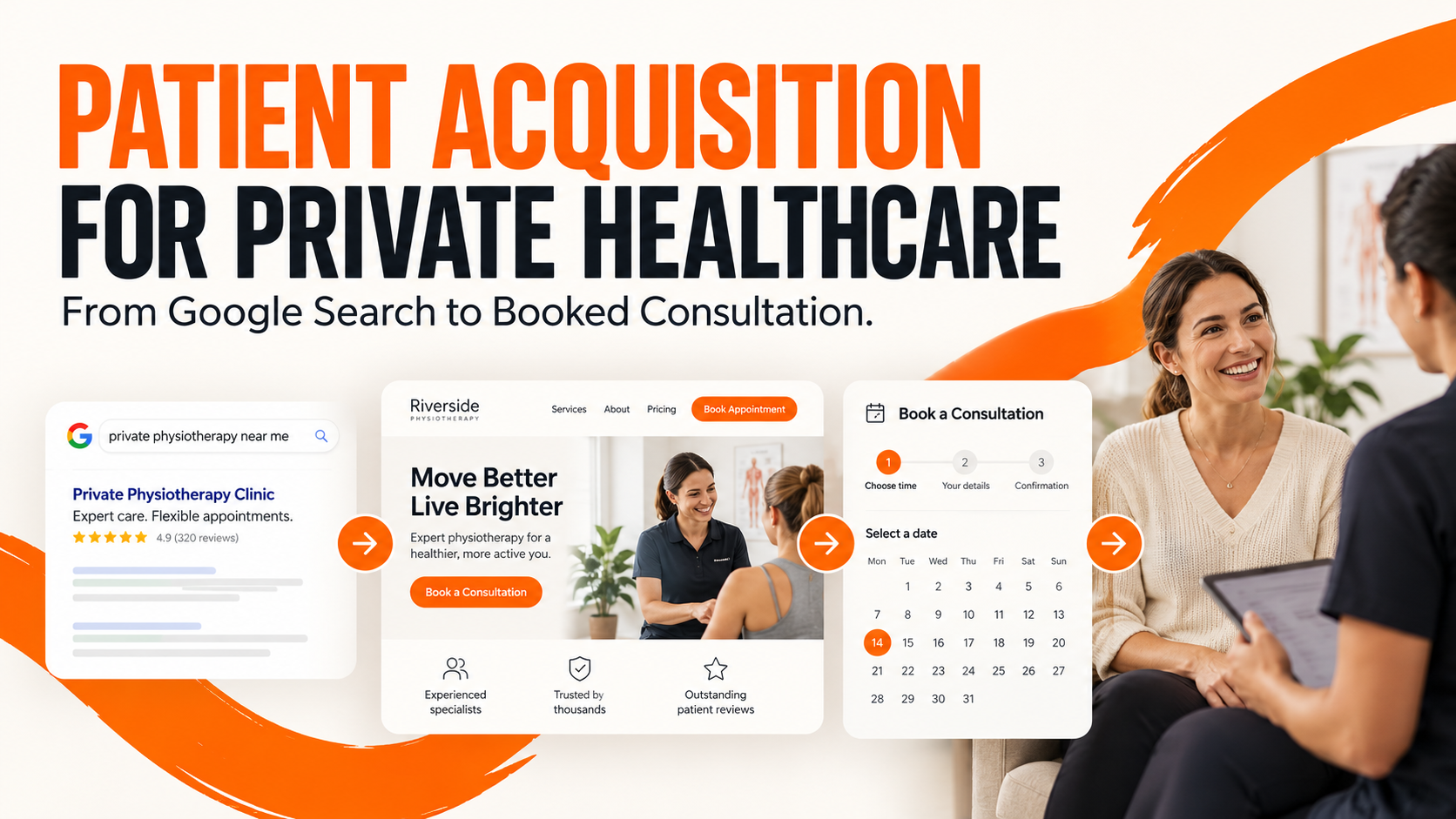
A specialist MSK provider may offer physiotherapy, diagnostic assessment, rehabilitation and other clinically led services, but combining everything on a single generic page can make the booking journey confusing. The aim of a service-page architecture is to help people locate a genuinely available appointment with the right professional, while keeping clinical information accurate and reviewed.
For: UK clinic owners and practice managers reviewing marketing and booking performance. Clinical claims, advertising eligibility and processing of patient data should be reviewed with suitably qualified professionals.
Clinic marketing support: Our Clinic Website Design and CRO service helps align specialist MSK service pages with practitioners, locations and a usable enquiry journey.
Build a service inventory before writing keywords
Create a working document listing the actual assessment and consultation types, provider qualifications, clinic locations and booking pathways. Add the question each page should answer and the responsible clinician who will approve clinical wording. Separate broad physiotherapy information from distinct specialist services rather than naming pages after every symptom combination.
Choose the primary intent for each page
A clinic overview answers who the provider is and where it operates. A specialist service page explains one distinct offering and how someone can ask about an appointment. A location page answers where the appointment takes place. A clinician biography establishes relevant qualifications and scope. When two pages answer essentially the same question, improve or consolidate rather than creating an extra near-duplicate.
Use sections that resolve genuine booking uncertainty
For each substantive service page, include who provides the consultation, locations, how the assessment starts, referrals where applicable, appointment length or fees when confirmed, and a clear contact path. If medical explanations are included, the clinic’s clinicians should review them. Never present a specialist intervention as universally appropriate or guarantee an outcome.
Connect clinicians, services and locations
Link from a real MSK service to the relevant practitioner’s profile and the locations offering it. A physio location page should link only to procedures actually available there. Supporting educational pieces may explain patient questions, but do not use generic keyword anchors repeatedly or insert dozens of cross-links that confuse the journey.
Protect patients from misleading equivalence
Not every clinician performs the same assessments and not every clinic has the same equipment. Make these limits obvious. A patient who clicks through from a paid campaign should arrive on the relevant service page, not an unrelated generic physio page. Review regulated claims before publishing advertising-oriented content.
Evaluate useful outcomes
Use Search Console landing-page data and actual enquiry records where available. Record whether service pages lead to qualified calls, suitable consultation requests or confirmed bookings, while recognising limitations in attribution. Keep sensitive clinical details out of marketing analytics; marketing should never determine clinical suitability.
A common clinic-owner question
Does every MSK condition deserve its own page? No. Only when there is a distinct useful user need, material clinic-specific information and an appropriate pathway; otherwise strengthen the relevant existing service page.
Related guidance
For the broader approach, see physiotherapy and MSK marketing, our physiotherapy topical authority guide and multi-location physio SEO. If injection services are offered separately, link them to the ultrasound-guided injection clinic service.
Request a specialist clinic marketing review to understand which of these areas needs attention on your existing website.