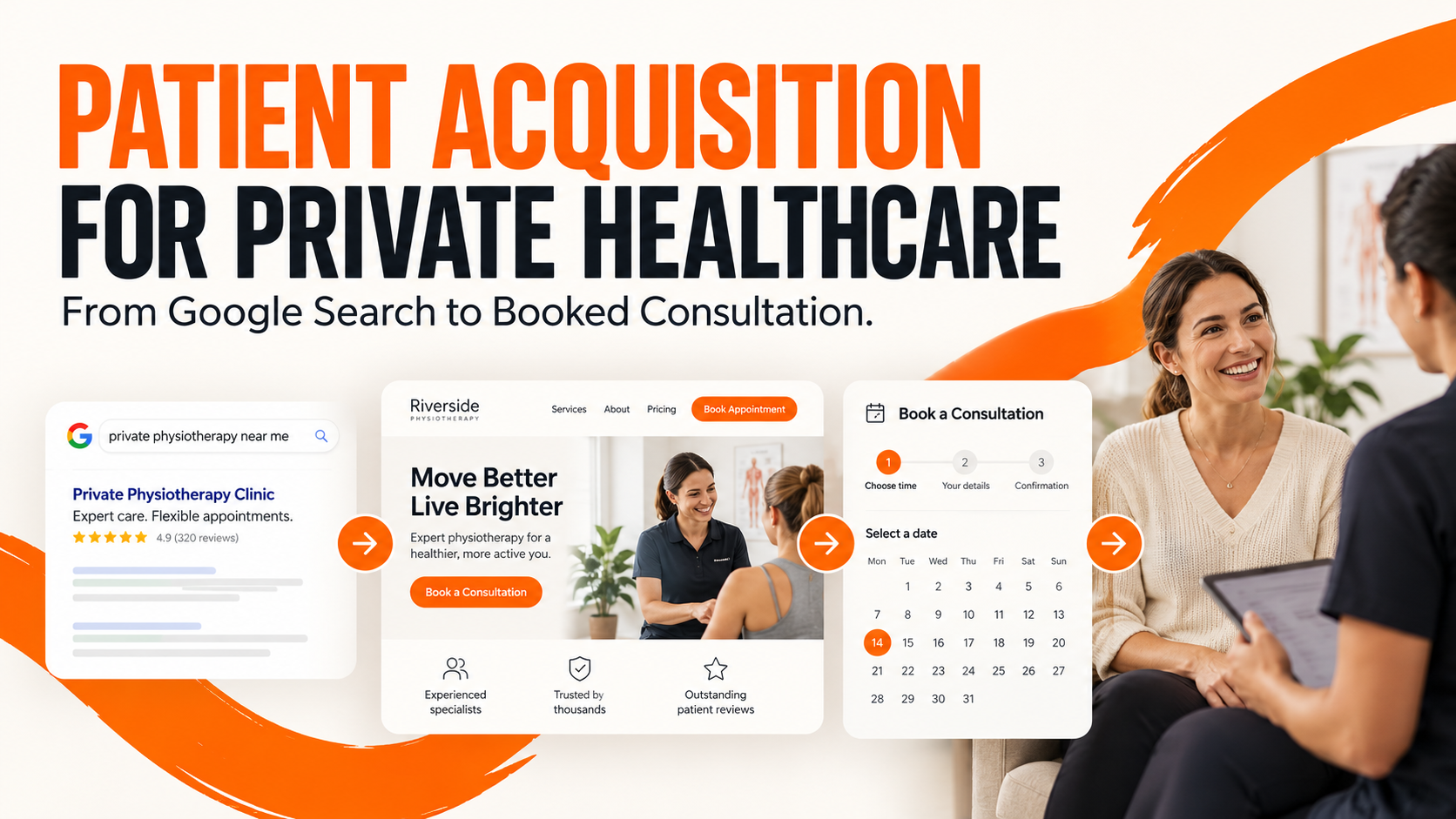
Searches for ultrasound-guided injection appointments are highly specific, but clinical suitability is not a marketing decision. Specialist service pages need to state clearly which consultations a clinic can provide and what the booking process involves, while avoiding promotional promises about a prescribed product or a guaranteed outcome.
For: UK clinic owners and practice managers reviewing marketing and booking performance. Clinical claims, advertising eligibility and processing of patient data should be reviewed with suitably qualified professionals.
Make the assessment route the starting point
Document the provider’s real pathway from first enquiry through clinical assessment, suitability discussion and appointment decision. Do not write as though every enquiry results in an injection. A clear consultation call to action is more reliable than a broad promise about pain relief or return to activity. The clinician should confirm exactly how the pathway works.
Use approved terminology and distinct scope
A general MSK overview and a specialist injection service page can coexist when they serve different needs. Name services only where they are genuinely offered and the clinician has approved the wording. Explain locations, appointment routes and referral requirements when relevant. Avoid repeating the same paragraph across multiple narrowly named ‘treatment’ pages.
Audit any product or medication references
Whether a specific injection or associated medicine can appear in promotional content depends on its regulatory status, the wording and advertising context. UK CAP rules prohibit public advertising of prescription-only medicines, and Google has separate healthcare restrictions. Obtain a policy assessment before treating a drug name as a target keyword or ad headline.
Show credible practitioner information
Patients should be able to identify the responsible practitioner, relevant professional credentials and where the consultation takes place. Do not infer eligibility or treatment outcome from an unrelated case study. If an article contains medical explanations, it should be reviewed by an appropriately qualified professional from the clinic.
Build the internal-link pathway around real services
From physiotherapy content, link to an appropriate specialist assessment page where it helps a person understand the clinic’s services. From the specialist page, link to locations, clinicians, FAQs and booking information. Supporting business-facing marketing content belongs on the agency website; treatment advice belongs to the provider and needs its own clinical editorial standards.
Inspect actual patient enquiries, not just rankings
Compare which service page generated a call or enquiry with actual consultation availability, where lawful reporting permits. Distinguish an initial enquiry from a confirmed appointment or procedure. When conversion tagging or forms break, a reported drop is not automatically evidence of reduced interest.
A common clinic-owner question
Should we create one SEO page for every injection name? Not automatically. Use a distinct page only when it represents a genuinely separate service with medically reviewed content and clear purpose, and independently assess whether the wording constitutes prohibited promotion.
Related guidance
See our specialist injection clinic marketing service, advertising and booking audit, and the Complete Injections case study. Official guidance: CAP rules on prescription-only medicines and Google healthcare advertising policy.
Request a specialist clinic marketing review to understand which of these areas needs attention on your existing website.